💳 FCODE - Tablet App Design for Idemia
Fcode
1 month
1 Lead designer, 2 Ux, 1 PM, 1 Dev fullstack
1 Application for Tablet
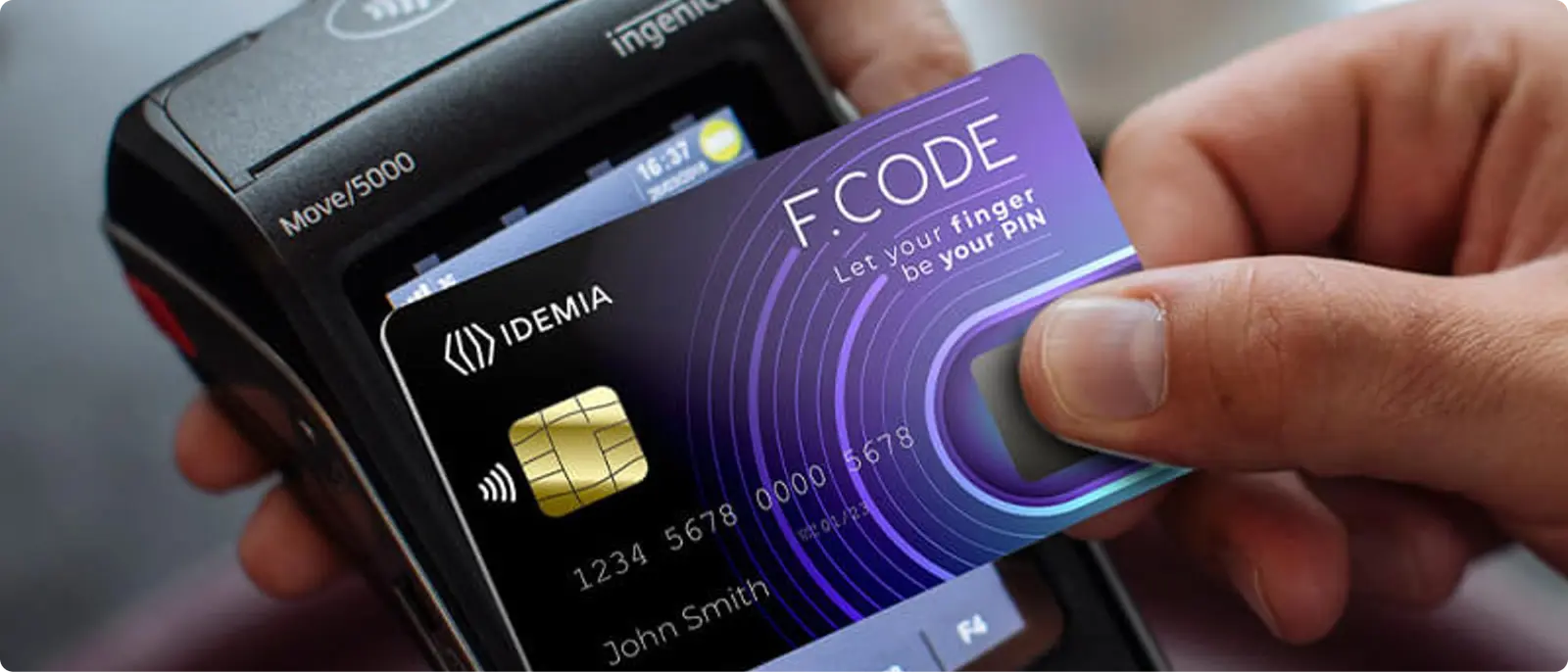
Build an application to enroll users' biometric fingerprints on a payment card.
Mission 1 : Understand
Project planning
- Kick Off
- Realization of the mock-ups
- Preparation of user tests
- 1 Guerilla test
- Analysis & Recommendations (modification of the mock-ups)
📦 Expected deliverables: 1 maintenance guide, mock-ups, design system, synthesis & ppt recommendation
- Preparation of user tests
- 1 Guerilla test
- Analysis & Recommendations
📦 Expected deliverables: 1 interview guide, synthesis & recommendation ppt, mock-ups, design system
A mvp of the project had already been done by the developer and a specification had been written by the project manager. The latter expected me to intervene on the user paths of the solution in order to challenge their intelligibility and accessibility
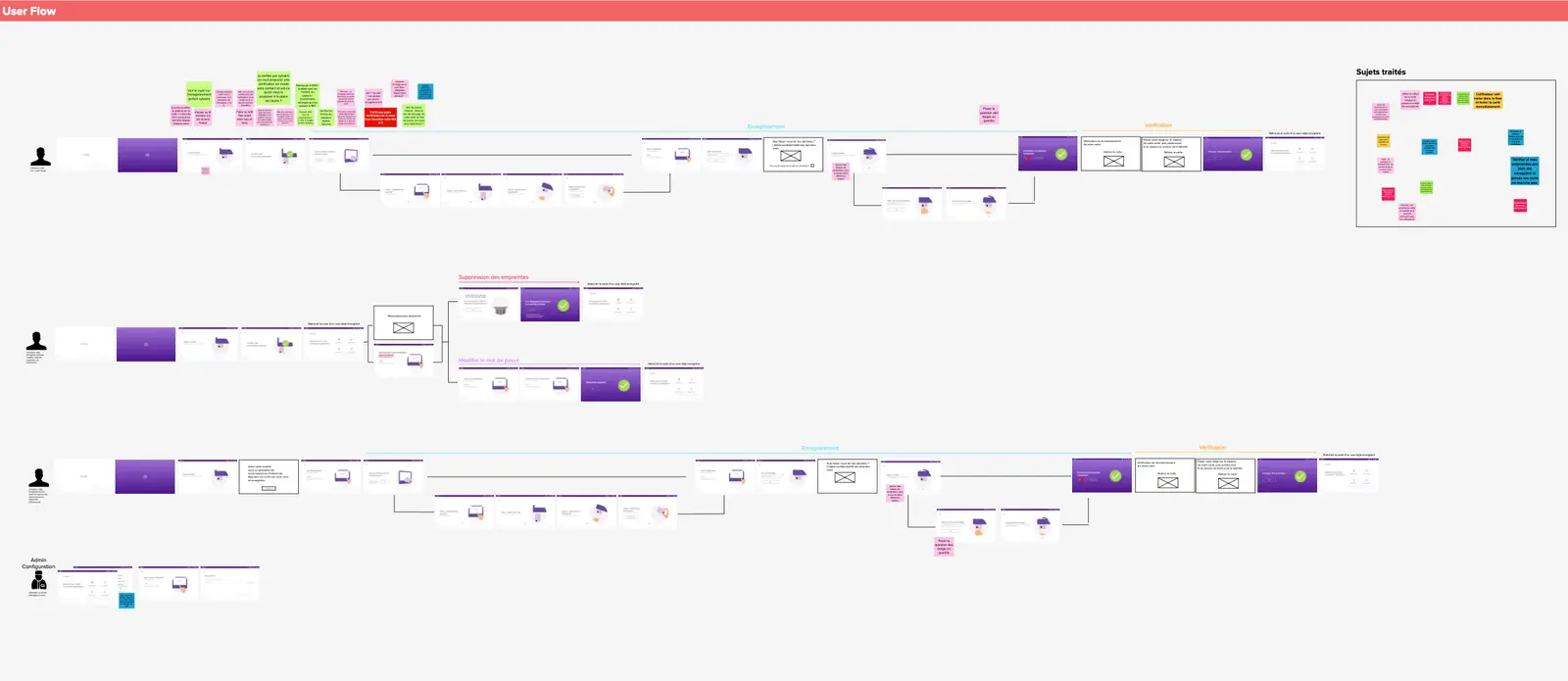
I first proceeded to an ergonomic audit of the interfaces and an analysis of the existing user path, then I made an experience map and a userflow to identify the context of use of the product.
Userflow
Map the different paths of the solution by associating the different corresponding screens.
Experience map
Creation of an experience map according the experience lived by the users
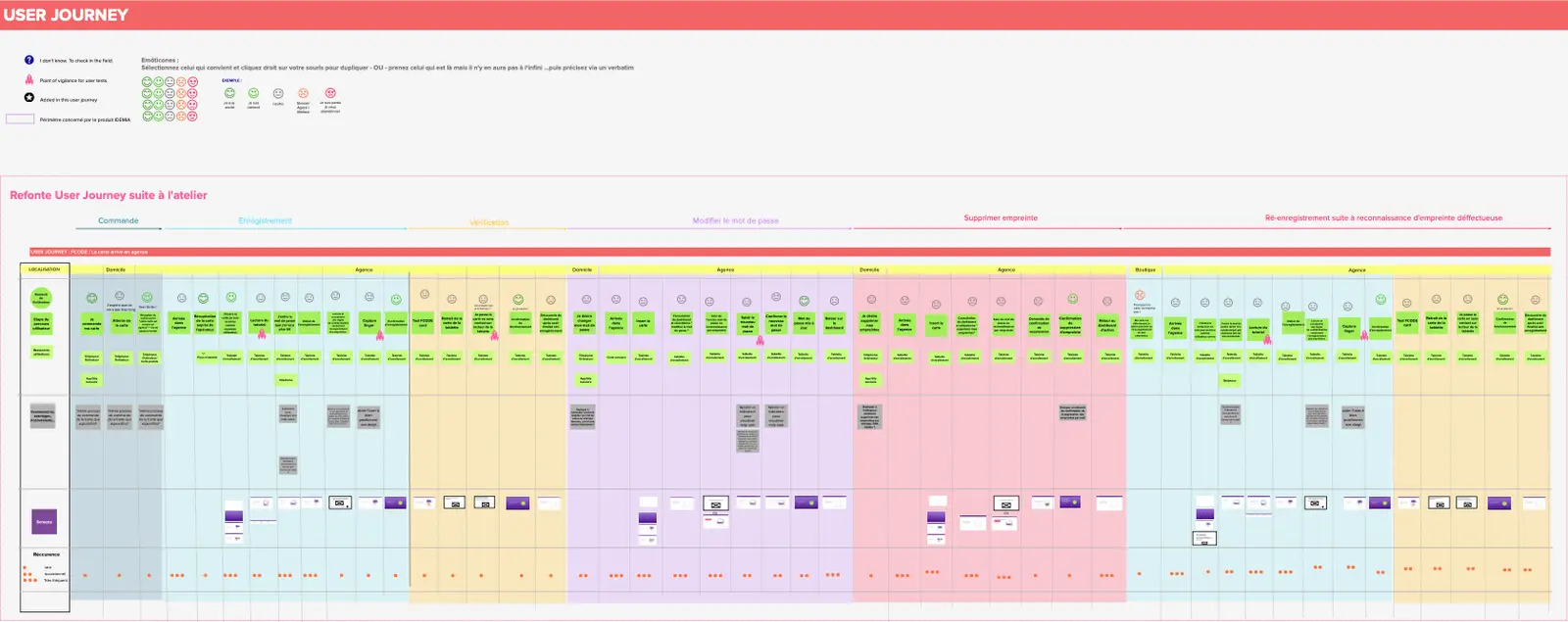
1. Several courses were missing
2. Many inconsistencies were present in the sequence of courses
Mission 2 : Co-construction workshop
I conducted a workshop on the Mural tool by presenting the userflow and the experience map in order to obtain details on the service thought by the project manager and to collect the developer's opinion in terms of feasibility.
- An understanding of the various technical specifications of the product
- The improvement of the current workflow
- The definition of the different paths to test
- A list of wireframes to realize
Mission 3 : Prototyping
Once all the paths were validated, I was able to create a design system based on Idemia's graphic charter and to create interactive mock-up with figma. I am not authorized to communicate the existing mock-up but you can have an idea of the solution by consulting the youtube video below communicated by Idemia.
Mission 4 : Test
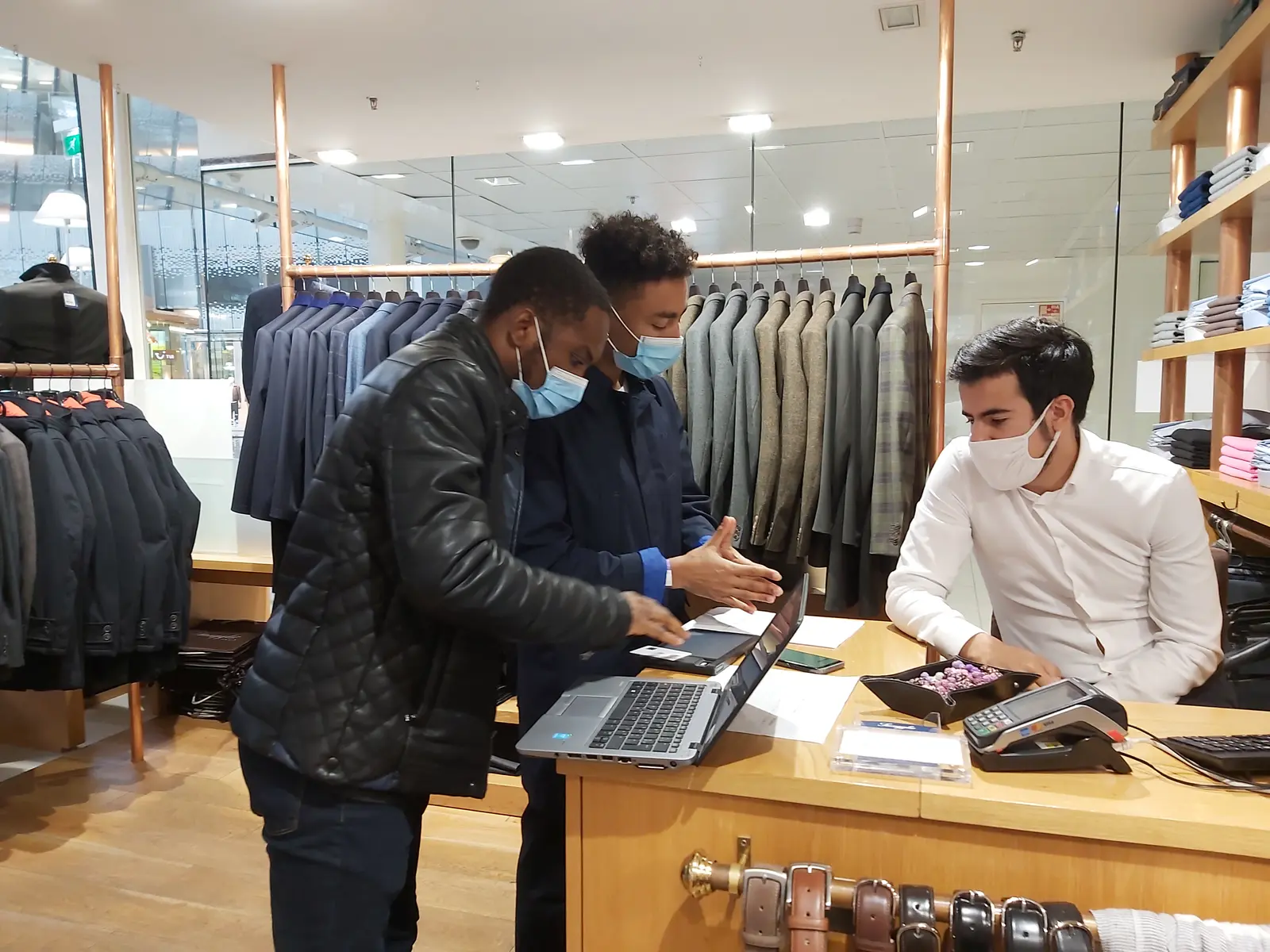
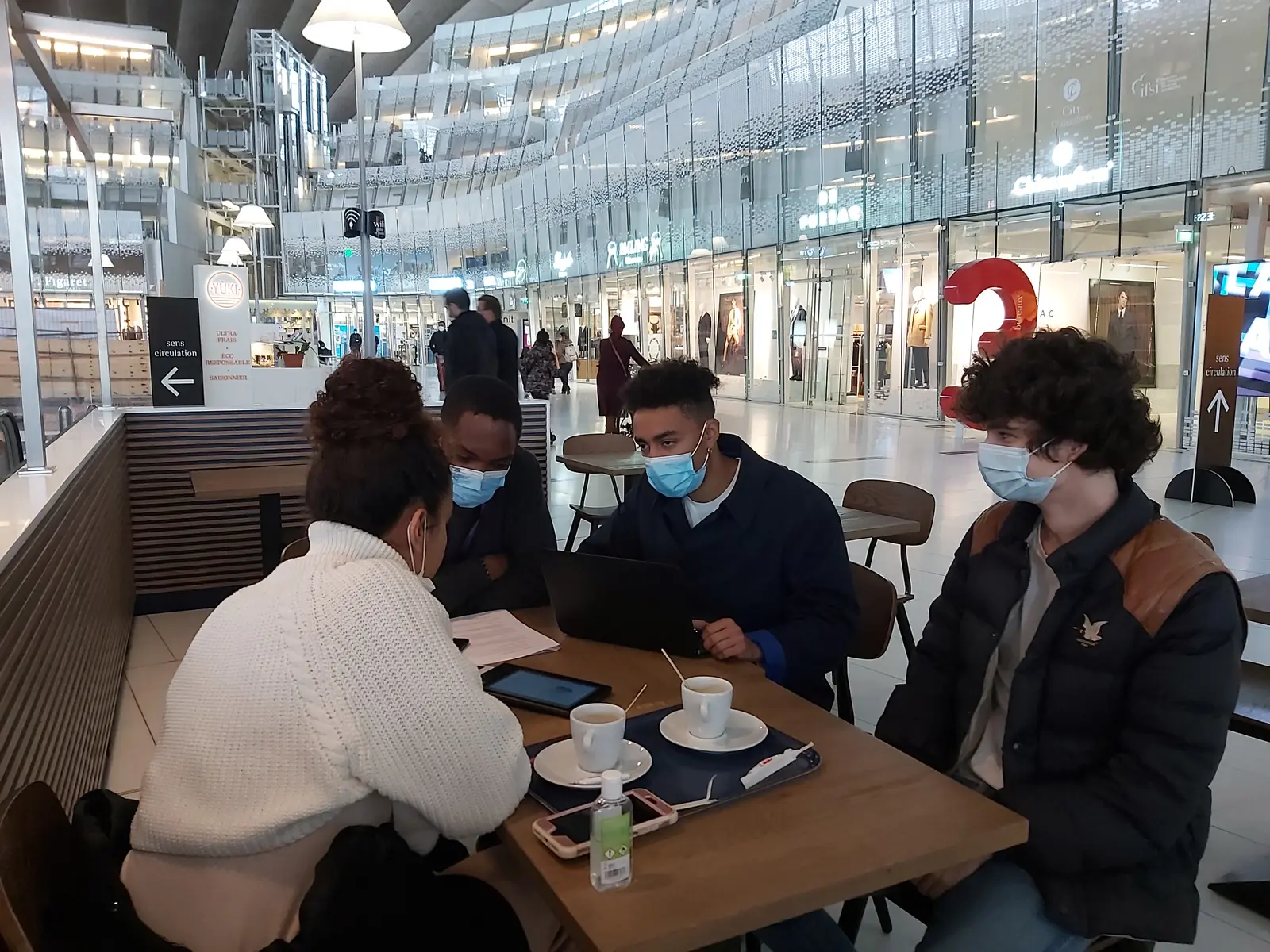
Once the interactive prototype was created in figma we decided to test it in guerrilla testing with users in order to challenge it. So I proceeded to write a test guide listing the objectives, the scope and the course of the test (pre-test questions, scenario, list of missions, post-test questions etc.). For each test, we make sure to record the session in audio (with the permission of the tested) in order to be able to quote user verbatims during our reviews. These user tests allowed me to discover various types of problems.
Guerilla Test
La méthode de Guerilla testing consiste à réaliser le test utilisateur dans l’environnement naturel de la cible : au bureau, dans un lieu public, à la maison, etc. A cet effet, il n’y a plus besoin de recruter des participants.
Why use guerilla testing and meet potentials users in the street ? Because every body could use the product.
Tests of the usability of the course (ergonomics, understanding of the wording and the product, the role of each screen).
I had 8 people test the interface to understand what were the weak points of the interface and what to use to reassure the users.
Mission 5 : Analysis
I used an excel file to process my observation grid and process my data in the form of an atomic research. I was able to define the recommendations to be implemented to respond to the problems identified during the user tests.

1. The majority of users were unable to complete the main scenarios independently
2. The tutorial was misinterpreted
3. Confused functionality
4. Lack of guidance in the solution
5. Physical pain encountered during handling
6. Lack of confidence in the security of their data
7. A Ux writing sometimes too technical or imprecise
Mission 6: Presentation of results
Key Results
Outcomes
This project was very interesting to work on because I intervened early enough in the project to challenge the user paths that had been defined by the developers, who were open to my recommendations. Discussing with the technical team is very important because it allows us to arbitrate the project and to remain realistic about the feasibility of the features we want to integrate as a designer. The guerilla-tests also allowed me to realize the indispensable character of user-tests in a project.
Process constraints
The project was not organized in agility but in V-cycle, our intervention as a designer was therefore defined and limited in time.
This project allowed me to realize that a project is never finished and that it must enter a continuous iteration loop if we want to ensure the quality of the product in the long term.